



Antsa Nomenjanahary Rakotondrandriana

admin03241305
"Building bridges"
Antsa Nomenjanahary Rakotondrandriana (ORCID 0000-0002-6890-9152) studied medicine at the Faculty of Antananarivo (Madagascar) and went on to specialise in public health. With a particular interest in clinical research and epidemiology, she joined the Clinical Trials Department of the National Centre for Pharmaceutical Research Applications (CNARP) in 2021 as a clinical trial investigator.
Valérie Bisson : Could you describe what led you to pursue scientific studies?
Antsa Nomenjanahary Rakotondrandriana : I have been interested in medical studies since I was a child. I was fascinated by the functioning of the human body, but also by healthcare. I was very attracted to science and already had the idea of improving everything related to medicine.
My grandfather was a doctor and he inspired me greatly. Healthcare has always been one of my primary concerns. When I was asked as a little girl what I wanted to be when I grew up, I would answer: I want to be a doctor!
V B : How would you define care?
A N R : Medicine is, above all else, a technical act. For me, this act must be accompanied by contact; listening, talking and communicating with empathy are an integral part of care. Suturing and treating also require reassurance. Care is both a medical act and an act of humanity.
V B : Is passing on knowledge part of your responsibilities?
A N R : That’s a very good question; when you love something, you want to pass on your passion to others. I taught medicine at the University of Fianarantsoa, and I enjoyed that experience. Now at CNARP, I have trainees who are interested in medicine, and they ask me for advice. Passing on knowledge and skills is essential. Working in public health requires a collective vision and large-scale dissemination. And I continue to treat and prescribe for CNARP staff.
V B : You moved from public health to clinical research. Could you explain how this shift came about?
A N R : After specialising in public health, I was hired by the CNARP as a doctor and researcher. When you are a doctor, you are already interested in research, as there are always innovations. In my case, I wanted to be able to care for several people at once in order to prevent disease and treat the community. I had to learn how public health works and its specific characteristics, as well as those of research, as they are inseparable. For me, it wasn’t exactly a shift, it was a whole package.
V B : How did you become involved in the IMPRIMA project?
A N R : The IMPRIMA project is an ambitious international project led by several organisations, including the CNARP. It is also a meaningful project, as many people in Madagascar are affected by malaria.
As a research physician at the CNARP, I was selected for this project and I am fully committed to it. The administrative side of things is very demanding, but I see this as a challenge. As a physician-researcher at CNARP, I was chosen for this project and I am 100% committed to it. The administrative aspect is very demanding, and I see this as a challenge. Developing the clinical study documents is a collaborative challenge that allows us to renew our knowledge of good clinical practices, and we are learning a lot from the practices of other countries. IMPRIMA is a tremendous opportunity to broaden our impact and move forward.
V B : Could you describe your vision of research in a few words?
A N R : Learning about medicine in depth has been a vocation, as has learning new things. Scientific innovation is a driving force, and clinical research is a real bridge between data, which can seem abstract, and the malaria patient suffering in their bed, who cannot be treated without specific knowledge about that individual. I like this idea of a bridge between a microscopic vision, which is that of research, and a macroscopic vision, which is that of humanity, humanity in the broad sense in the sense that we work for the collective good.
Interview conducted by Valérie Bisson and Jackie Andriarison on 24 September 2025.

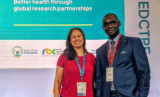
Burundi joins EDCTP

The Burundi National Institute of Public Health (INSP) began operations in 1999. Led since 2018 by Professor Joseph Nyandwi, the INSP’s mission is to strengthen the capacities of the ministry responsible for public health. A multi-purpose centre, it integrates training and research in public health as well as laboratory analysis and environmental monitoring. In this capacity, the INSP strives to provide the Burundian population, particularly the most vulnerable groups, with access to quality preventive, curative and promotional care based on choices informed by scientific evidence.
Involved in the IMPRIMA project (EDCTP 3 funding) since April 2023, the INSP, represented by Joseph Nyandwi and Denis Niyomwungere, has submitted an application enabling the Institute to join the European & Developing Countries Clinical Trials Partnership (EDCTP) programme.
The EDCTP Association General Assembly officially approved Burundi’s membership on 24 September 2025, marking an important step in strengthening regional collaboration in global health research.
Burundi became the newest member country, bringing the total number of participating African countries to 31. By joining the Association, Burundi is now eligible for funding from the Global Health EDCTP3 programme and can contribute to the programme’s strategic direction.
Artemisinin resistance – A race against time
In May 2025, health officials from African countries where malaria is endemic and their international partners called for enhanced action to combat resistance to antimalarial drugs, a growing challenge that threatens to undermine hard-won progress in the fight against one of Africa’s deadliest diseases.
Held on the sidelines of the 78th World Health Assembly in Rwanda, this high-level gathering highlighted the urgent need for coordinated action to contain the spread of resistance to first-line antimalarial drugs.
‘Resistance to antimalarial drugs is a threat to all communities on this continent,’ said Dr Sabin Nsanzimana, Rwanda’s Minister of Health. “It requires a common response based on science, solidarity and speed. “
The side event brought together a powerful coalition of co-organisers, including Eritrea, Ethiopia, Namibia, South Sudan, Uganda, the United Republic of Tanzania and Zambia. Supporting partners included the World Health Organisation (WHO), Medicines for Malaria Venture (MMV), the RBM Partnership to End Malaria, and the Africa Centres for Disease Control and Prevention (Africa CDC). Combating resistance to antimalarial drugs is a key public health priority, particularly in the African region, which bears 95% of the global burden of malaria. According to the latest WHO World Malaria Report, four countries in East Africa – Eritrea, Rwanda, Uganda and the United Republic of Tanzania – have confirmed the presence of partial resistance to artemisinin, the main compound in the most effective treatments for P. falciparum malaria. Resistance is also suspected in other countries, including Ethiopia, Namibia, Sudan and Zambia.
Drug resistance is due to several factors, such as the use of substandard or counterfeit medicines and failure to complete treatment courses. Protecting the effectiveness of artemisinin-based antimalarial drugs is now a race against time. Given the heavy reliance on artemisinin-based combination therapies (ACTs) in Africa, a complete failure of treatment could have very serious consequences.